


Rollers use the weight of the vehicle to compress the crushed surface (static) or use machinery (vibration). In road engineering, the initial compaction of the base material is carried out with a cushion block or "sheep's foot" roller. Due to the small surface area of the liner, higher compaction density can be achieved. On large highways, four-wheel compilers with foot drums and blades will be used because of the weight, speed and thrust of large blocks of material. On local roads, smaller single-foot drum machines can be used.
A smooth roller compacts the high point until the soil is smooth. This is often used in conjunction with an electric grader to obtain a level surface. Sometimes a tyre roller is used at this stage. These rollers have two rows (front and back) of overlapping pneumatic tires, and their flexibility provides a kneading action to seal the surface, allowing the rollers to work efficiently on uneven ground as the wheels move vertically. Once the bottom of the soil is level, the drum compiler is no longer used on the road surface.
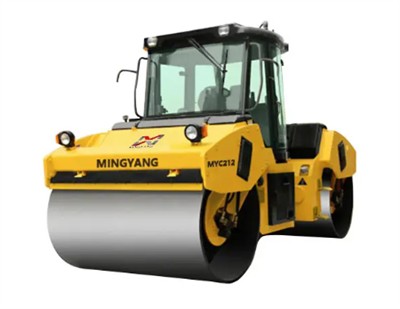
The next layer (roadbed) is compacted with a smooth single drum, smooth tandem roller or pneumatic tire roller combined with a grader and water wheel to achieve the desired flat surface and correct moisture content for optimal compaction. After roadbed compaction, smooth single drum compacting machines are no longer used on the road surface (unless the single drum is equipped with a special flat wide base tire on the machine).
The final wear layer of asphalt concrete (called asphalt or asphalt in North America and gravel in the UK) is laid by a paver and compacted by a tandem smooth roller, three-point roller, or pneumatic tyre roller. Three-point rollers on asphalt roads were once common and are still in use today.Vibratory Roller


